
Trine promotes faculty, staff
September 23, 2026
Trine University promoted faculty and staff members in multiple departments to new roles over the summer.
1/3
June 19, 2026
By Maria Gerschutz, Ph.D.
 As we prepare to celebrate International Women in Engineering Day (INWED) on June
23, it’s a great time to reflect on how far women have come in engineering fields
as well as to assess opportunities for improvement.
As we prepare to celebrate International Women in Engineering Day (INWED) on June
23, it’s a great time to reflect on how far women have come in engineering fields
as well as to assess opportunities for improvement.
While society is doing much better than the 1960s, when Trine (then Tri-State) University only had five female students out of 1,600 studying engineering and business, the gender gap in engineering as a profession is still way too wide.
The U.S. Bureau of Labor Statistics estimates that women make up about 16% of engineers and architects. Though fields like biomedical engineering have higher female representation, it’s estimated that women make up little more than 8% of mechanical and electrical engineers.
It’s also worth noting that about 20% of U.S. college engineering graduates are women, indicating that at least some don’t choose to pursue a career in the field despite completing their degree.
Better outcomes
Outside of societal issues of fairness, research indicates that having more gender balance results in better engineering outcomes.
Teams with only male engineers can sometimes fail to take the unique needs of females into account in their designs.
Women generally also bring different perspectives to projects. Besides the different experiences they bring to the table, brain research suggests that women are more likely to use both brain hemispheres, providing a wider view to solve engineering challenges. As a result, studies show that engineering teams with a diversity of genders are more productive and collaborative while generating more profit for the companies they serve.
Given these benefits, what can we do to bring more women engineers into industry?
There are many organizations already working to promote STEM education and careers to girls at the elementary, middle and high school level as well as college, including Women in STEM, Girls Who Code, the National Girls Collaborative Project and many others.
It’s important that these efforts are supplemented by providing female teachers and faculty in STEM classes to serve as role models and mentors, since research shows that female students perform significantly better in these courses when they are taught by women.
More role models are needed in the corporate world as well, where the number of women in leadership roles at engineering companies roughly mirrors that of the overall number.
Trine University boasts several incredible female members on our engineering faculty, and we hope the number will continue to increase along with the number of female engineering students, who made up about 18% of our majors last year. We also are doing everything we can to develop leadership along with engineering skills, including networking opportunities through the Society of Women Engineers.
In addition, a number of our senior design teams this past year featured women engineers in the lead role.
Obviously, there is much more room to grow, both for Trine as an institution and for our field as a whole. I hope that education, industry and advocacy organizations can continue to work together to not only support more parity, which will produce better engineering outcomes for all of us.
Maria Gerschutz is chair of Trine University’s Jim and Joan Bock Department of Biomedical Engineering.
Trine University promoted faculty and staff members in multiple departments to new roles over the summer.
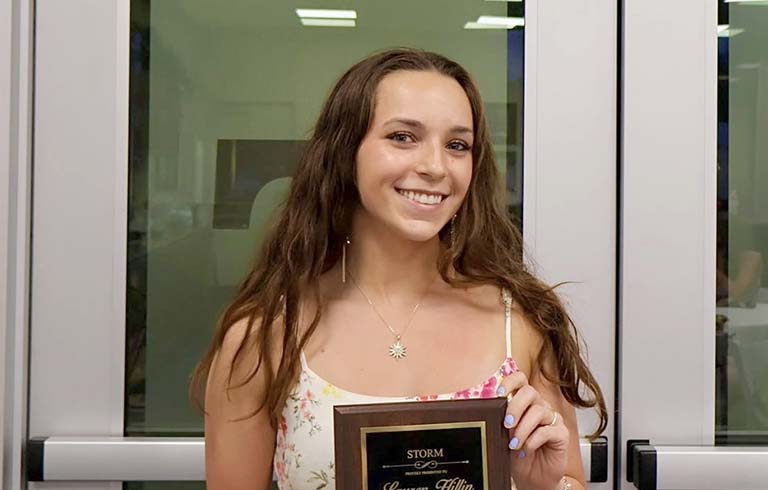
The Phi Eta Sigma National Honor Society recently named Trine University pre-med biology student Lauren Hillin of Charlotte, North Carolina, its Foy-Sagabiel Undergraduate Scholar Leader of the Year.
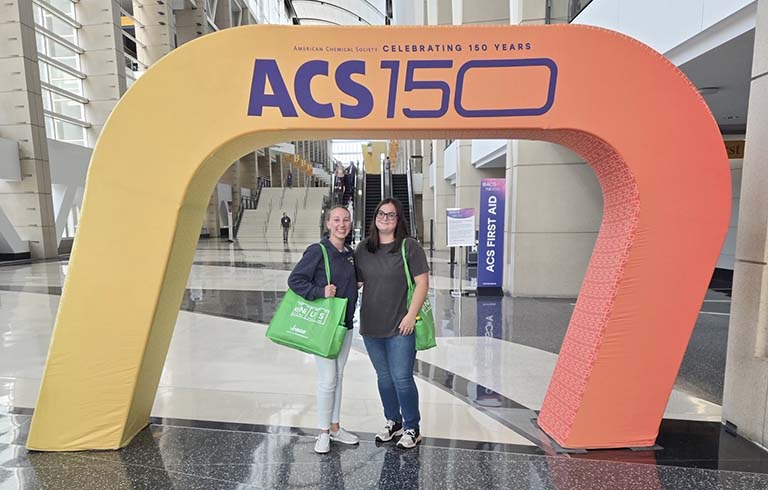
Two Trine University students — Chloe Laird, a chemical engineering major from Warsaw, Indiana, and Makenzie Amich, a forensic science major from Thorntown, Indiana — recently had the opportunity to connect with thousands of chemistry professionals and students from across the country at the American Chemical Society (ACS) national meeting in Chicago.